
An AI suggestion can improve one part of a proposal and make another part worse. It might sharpen the outcome, expand the scope too far, and add a question the team has already answered. “Accept” is too coarse a decision for that mix.
That was the problem we wanted to address in Ideas. A useful improvement flow should let someone keep the pieces they agree with while preserving the judgment already in the brief.
The work began with the brief itself. A proposal needs enough substance to review before an assistant has anything meaningful to improve.
Give the idea room
The earlier Ideas layout tried to fit a ledger, a fixed inspector, filters, evidence and evaluation controls into one surface. Some information appeared more than once. The central proposal received less room than the machinery around it.
We moved toward an open notebook. An expanded idea could explain today's problem, the intended change, the pieces included, the tradeoffs and the sources behind it. A compact rating could remain available without becoming the headline of the page.
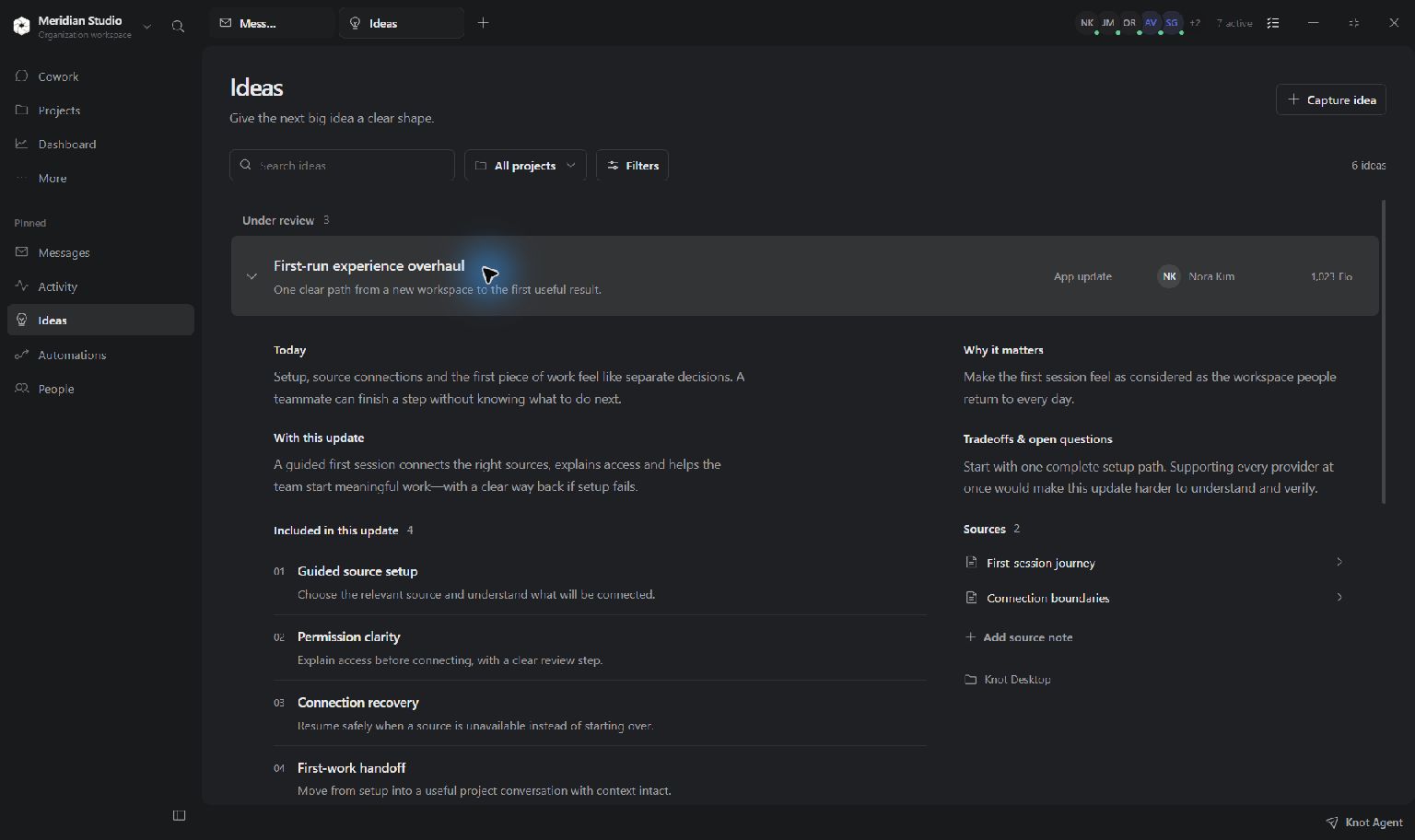
That structure gives a suggestion somewhere specific to land. “Make this idea better” is vague. A proposed change to its intended outcome, scope or validation question can be compared with the text already there.
It also makes disagreement more useful. You can agree that the outcome needs to be clearer without agreeing that the update should become larger.
Review changes where they happen
We explored three ways to present improvements. Side-by-side full briefs made the overall comparison visible, but repeated everything that had not changed. A guided sequence focused attention on one suggestion at a time, but made it harder to inspect the complete set before deciding.
We selected inline change review. Each suggestion carries its current wording, proposed wording and a reason. Each can be included independently. The action at the bottom describes the number of changes that will actually be applied.
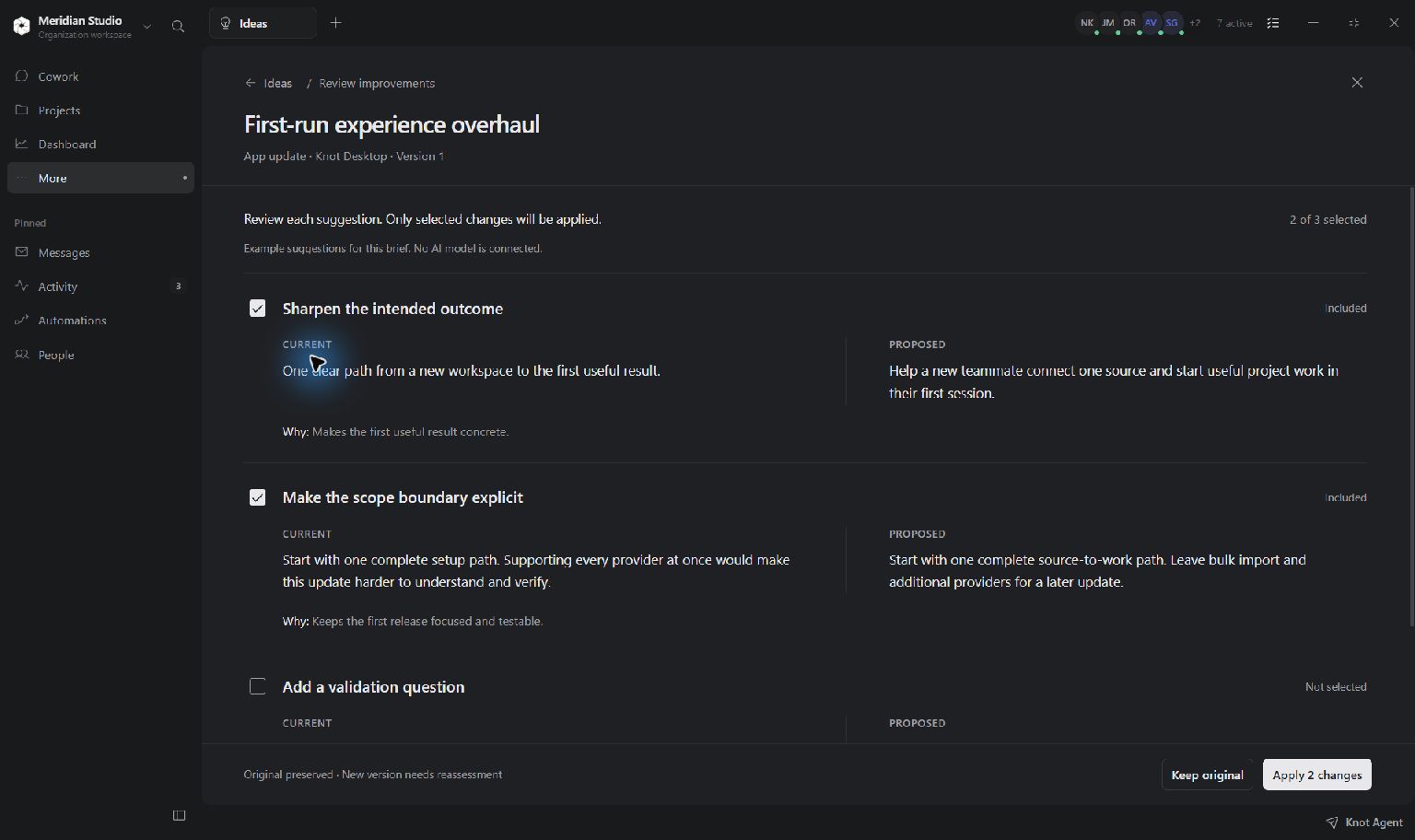
The point is not to make every recommendation look persuasive. It is to make the decision inspectable. Someone should be able to understand what a selection will replace before it replaces anything.
The original brief remains an available choice too. Getting a suggestion does not create an obligation to use it. An empty result should remain empty; a failed request should remain a failure. Neither should quietly turn into a convincing canned answer.
That is especially important while building the frontend. Authored examples are useful for reviewing the interface. They need to be deliberately selected examples, not fallback content that impersonates a successful model response.
Apply once, preserve what came before
Selected changes are applied together as one substantive revision. Unselected wording remains untouched. Administrative details such as the owner or review stage do not need to be rewritten because a sentence changed.
We also preserve the complete prior brief. A history entry that merely says “improved with AI” would lose the evidence needed to judge the improvement later. The person reviewing the next version needs to be able to inspect the old one.
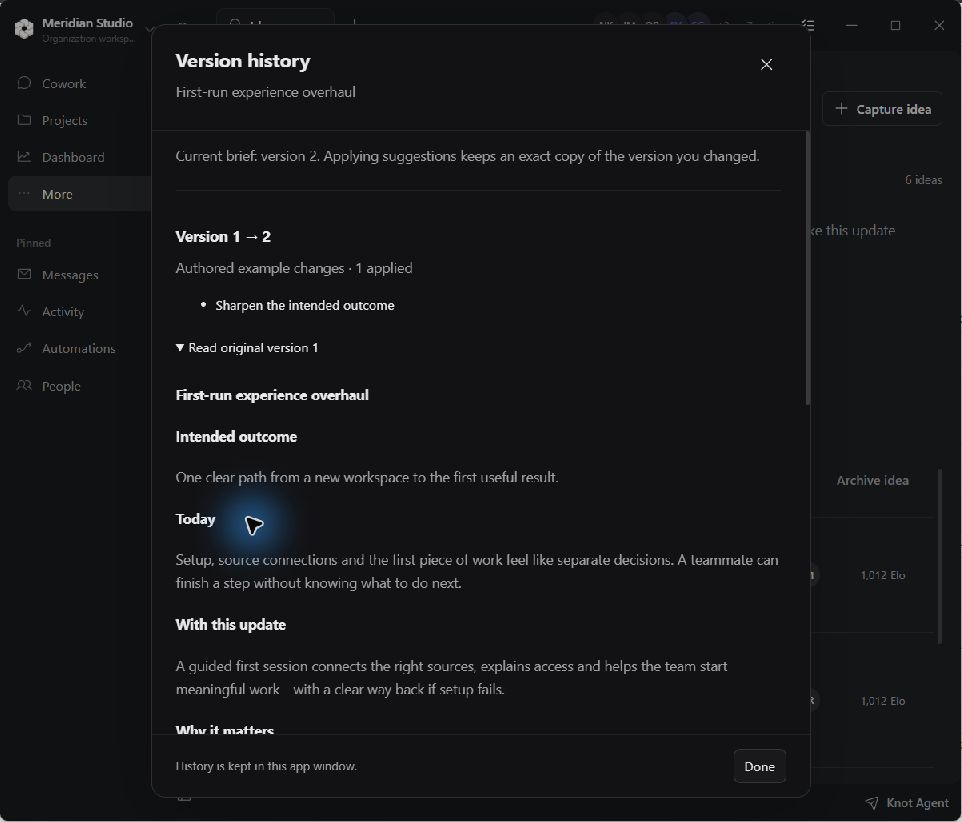
The distinction between content and administrative changes matters for assessment as well. A judgment about an earlier proposal should not silently transfer to a materially different one. Substantive edits make the current assessment require reconsideration; they do not automatically increase its rating.
The larger question of how to evaluate ideas reliably remains separate. A well-presented rewrite is not evidence of a better business decision, and a longer brief does not deserve a higher score merely for being longer.
Protect the work happening in between
There is another case an improvement flow has to respect: the brief can change while a suggestion is being prepared or reviewed.
If someone has an unfinished manual edit, applying a suggestion should not overwrite it. If the proposal has changed since the suggestions were produced, the old result is no longer a safe match. A late response after cancellation should not come back and alter the document.
These are ordinary editing concerns, made more important by an asynchronous assistant. The interface needs to preserve the person's work even when a response arrives at an inconvenient time.
The September implementation established that review behavior locally, with a disconnected generation interface and explicit example content. It was not a production AI evaluation launch.
What we wanted to settle first was the relationship between assistance and authorship. The assistant can propose a change. The person can inspect it, accept part of it, leave the rest, and return to the original. Useful help should leave that control intact.