
A shared room is useful when there is something to share. For a team arriving for the first time, it can also be a rather large blank page.
That was the problem behind our early project-first work. Continuum was central to the product, so it was tempting to make it central to every first action. But a place for coordinating work cannot tell a new team what its work should be. The first useful question was smaller: what are you trying to get done?
In August, we put the project ahead of the coordination room in the arrival flow. Name the work, bring in the relevant material, then start a focused thread. Continuum could connect those threads once they existed.
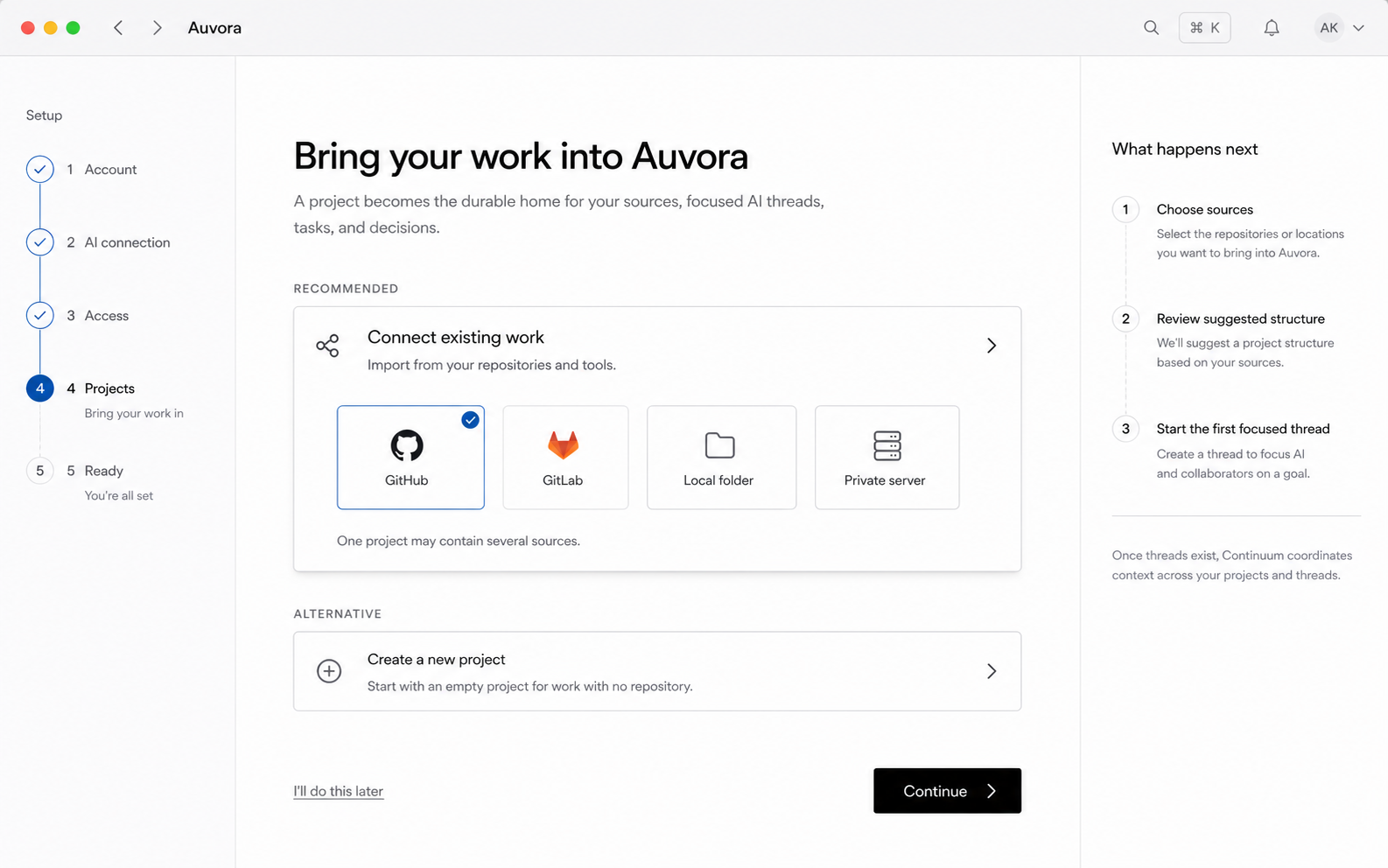
A project does not have to start with a repository
For software work, connecting a repository is an obvious first step. The code already exists, it has a name, and it gives the conversation something concrete to refer to. We made that a prominent path without making it the definition of a project.
A release might involve code, installation notes, a research document and a review checklist. Those sources support one outcome, even if they live in different places. A planning project might have no repository at all.
The project therefore needed its own identity. A source could suggest its name, but the person setting it up still reviewed the boundary and objective. Starting without sources was valid too. The absence of a connected folder should not force someone to pretend their work is software development.
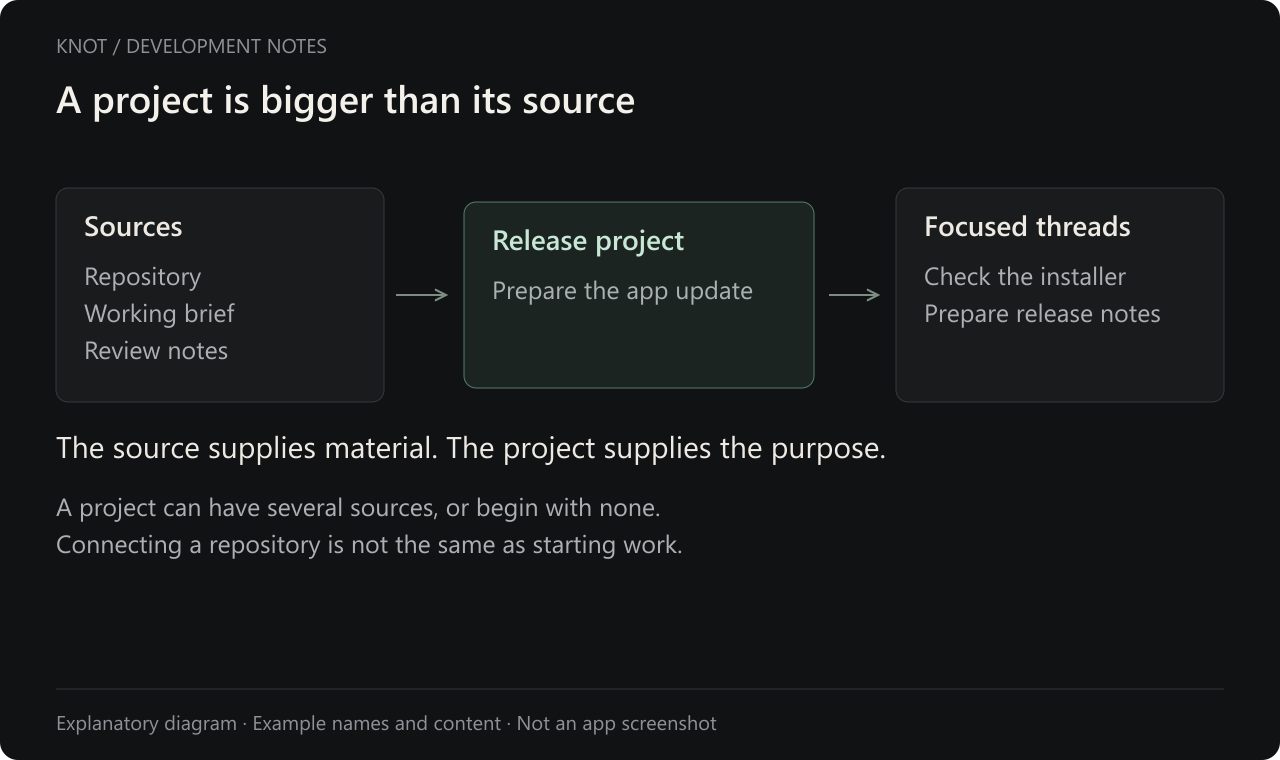
That distinction also kept the first screen from doing too much. Establishing a project did not silently start a thread, invite a coworker or produce an AI response. It created the place where those next decisions would make sense.
Make the first conversation specific
Once the project existed, the next step was a short brief for its first thread. The August flow asked for an outcome-oriented name and an objective that would remain available after the opening message.
Consider a release project. “Installer” is a topic. “Check the installer before release” is an assignment someone can begin to reason about. The completion objective can explain what the team needs back: findings, supporting checks and any unresolved release decision.
That small amount of preparation helps distinguish a useful conversation from an empty chat with a promising title. It also gives later participants something to read before adding another interpretation of the task.
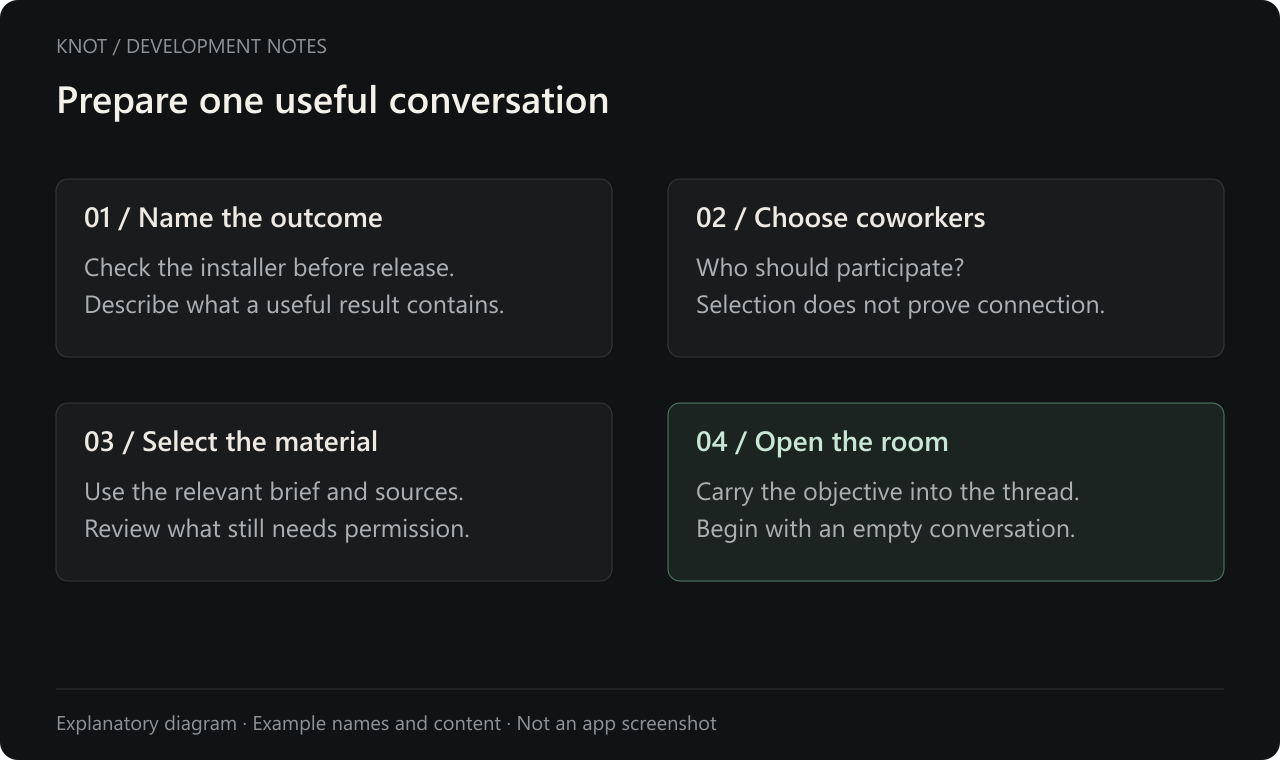
The selected coworkers were another explicit choice. Different participants could bring different capabilities, but selecting a name was not enough to say that worker was connected or ready. The interface had to retain the difference between an intended participant and a verified connection.
The same applied to source material. The project brief, selected sources, relevant records and authorized Continuum decisions were separate areas of context. The thread did not inherit the entire coordination history by default.
Preparation has a cost
There is an easy way to ruin this idea: turn the first useful action into a long configuration exercise.
We kept secondary actions beside the main path. A team could add sources or teammates without losing the purpose of the screen. Someone who was not ready to establish a project could finish later, without the product filling the workspace with invented activity to make it look occupied.
The tradeoff was deliberate. We wanted enough structure to make the next conversation useful, but not a questionnaire that asked a person to design the whole organization before discussing one task.
It is worth judging setup by what it helps a person do afterward. A field that does not clarify the first conversation or an important boundary has to earn its place.
Let an empty room be honest
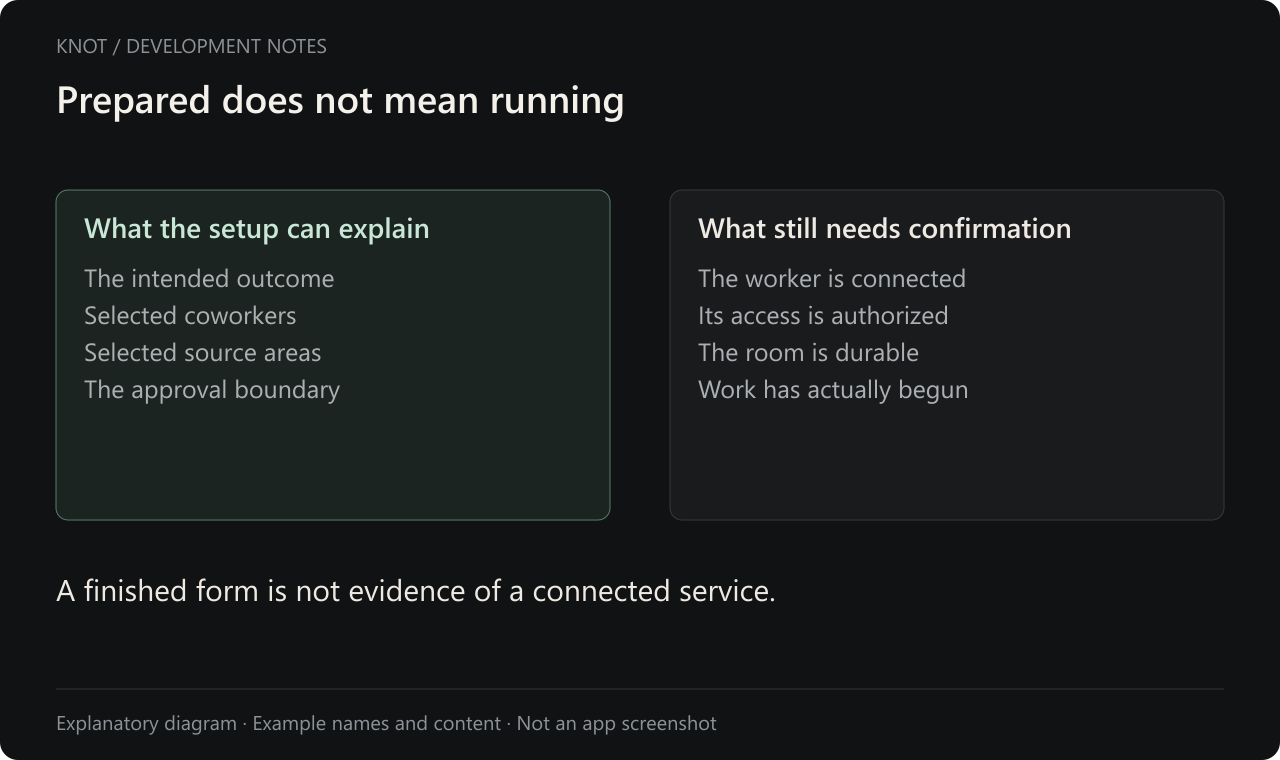
The August implementation was a local frontend contract. It could carry the objective into the thread's context and open the resulting conversation. It could not establish provider access or make that room durable through a server. Those connections were separate work.
So the final room began empty. No agent welcomed the team with a fabricated finding, and no progress appeared simply because the setup form was finished.
That empty state was more useful than a busy one. The team had a purpose, a place for the conversation and a clear next action. It could begin without first deciding which of the product's reassuring signals were real.